.png)
When a robot runs five shifts, there is no good time to stop it. Many OEMs keep calibrated spare robots for that reason. Changing one normally takes 2–3 hours, and in a line running around the clock, those hours are lost production.
What makes a cell easy to maintain
A custom cell is built to do one job well. Over the years it also becomes unique, with its own code and wiring, and maintenance has to know each one. A single cell can hold 50,000–100,000 lines of custom code and its own electrical circuits. Large OEMs work with rulebooks to standardise their cells, and that helps. Still, each cell ends up a little different from the next.
The question I find useful is where the variation should sit. If it sits in the hardware, every cell is its own maintenance project. If it sits in the software, the hardware can be the same everywhere.
Standard hardware, flexible software
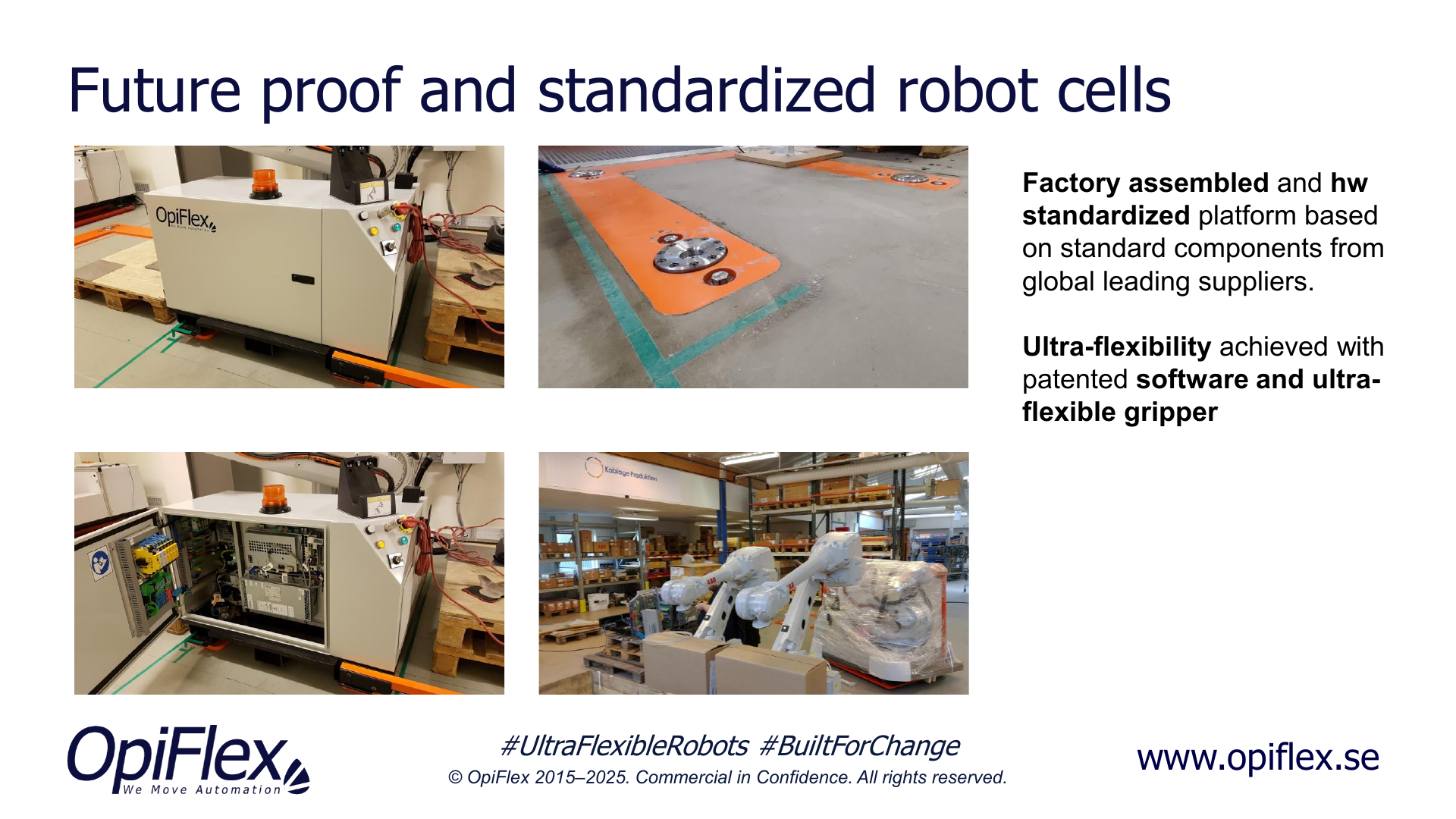
OpiFlex cells are assembled in our factory in Västerås on a standardised platform, built from standard components from established global suppliers. The flexibility sits in the patented software and the grippers. The software generates the robot code, gets automatic updates, and the code is fully deterministic.
Quick Swap: maintain out of line
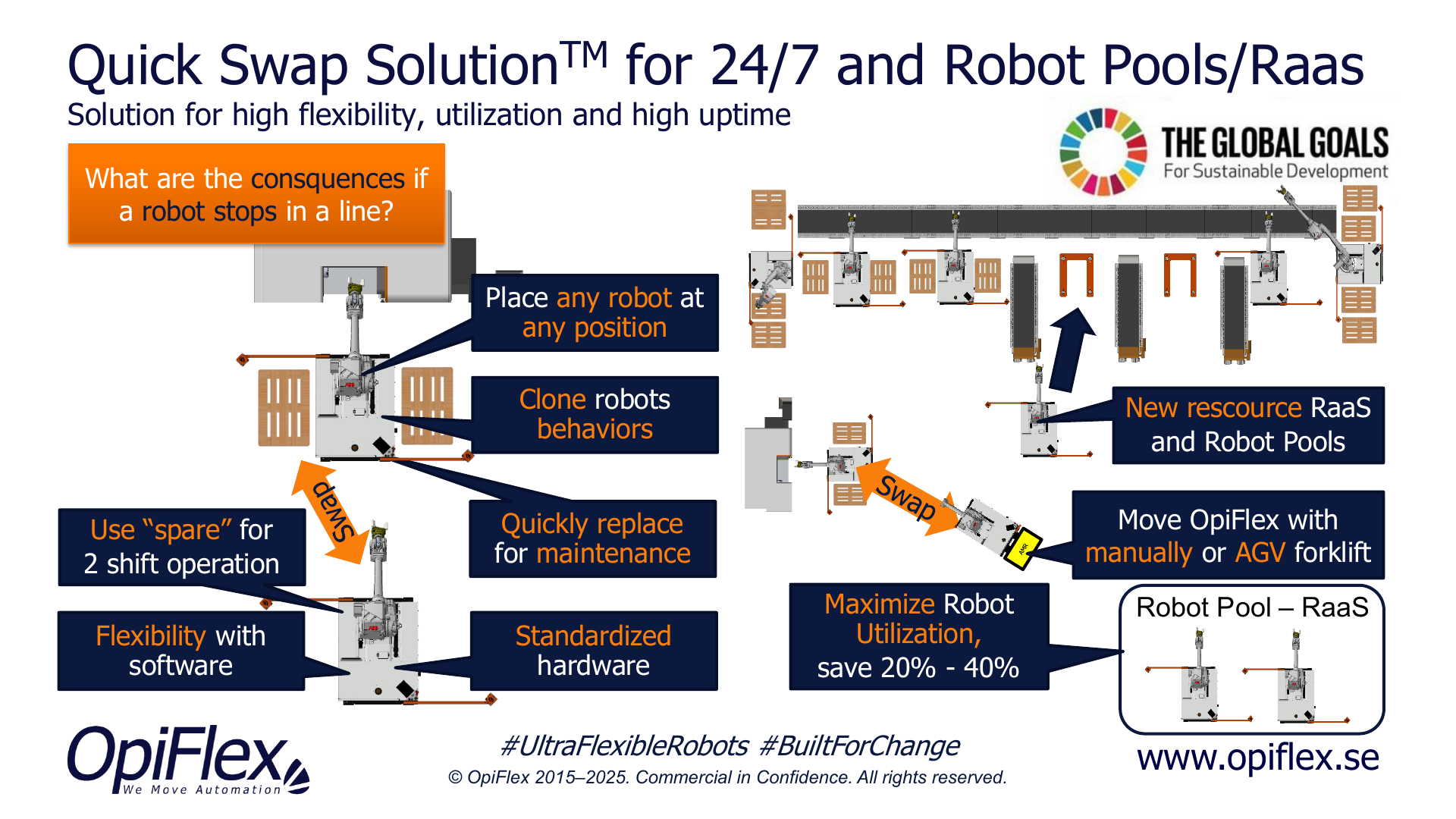
Because every platform is built the same way, a robot can be replaced instead of repaired in place. With Quick Swap, the change takes about 15 minutes, compared with 2–3 hours for changing a calibrated spare robot. Any robot can be placed at any position, and the robot's behaviour is cloned, so the replacement does the same job. The robot that needs service is then maintained out of line, without stopping production.
Robot Pools
Standardised, mobile robots become a shared resource. With Robot Pools, they are moved between lines, shifts and machines, with a pallet truck, manually or by AGV. A robot that is not needed in one place can do useful work in another.
Support that follows the shifts
Service agreements are available up to 24/7, with remote and on-site support. Full statistics and reports show how each robot is used.
Your maintenance situation
If your maintenance team looks after many different robot cells, I would like to hear how you work today and where the hours go. Then we can see together whether a standardised platform would make a difference in your plant. Contact us.
Related articles
-
Fenceless safety for large robots at full speed | OpiFlex
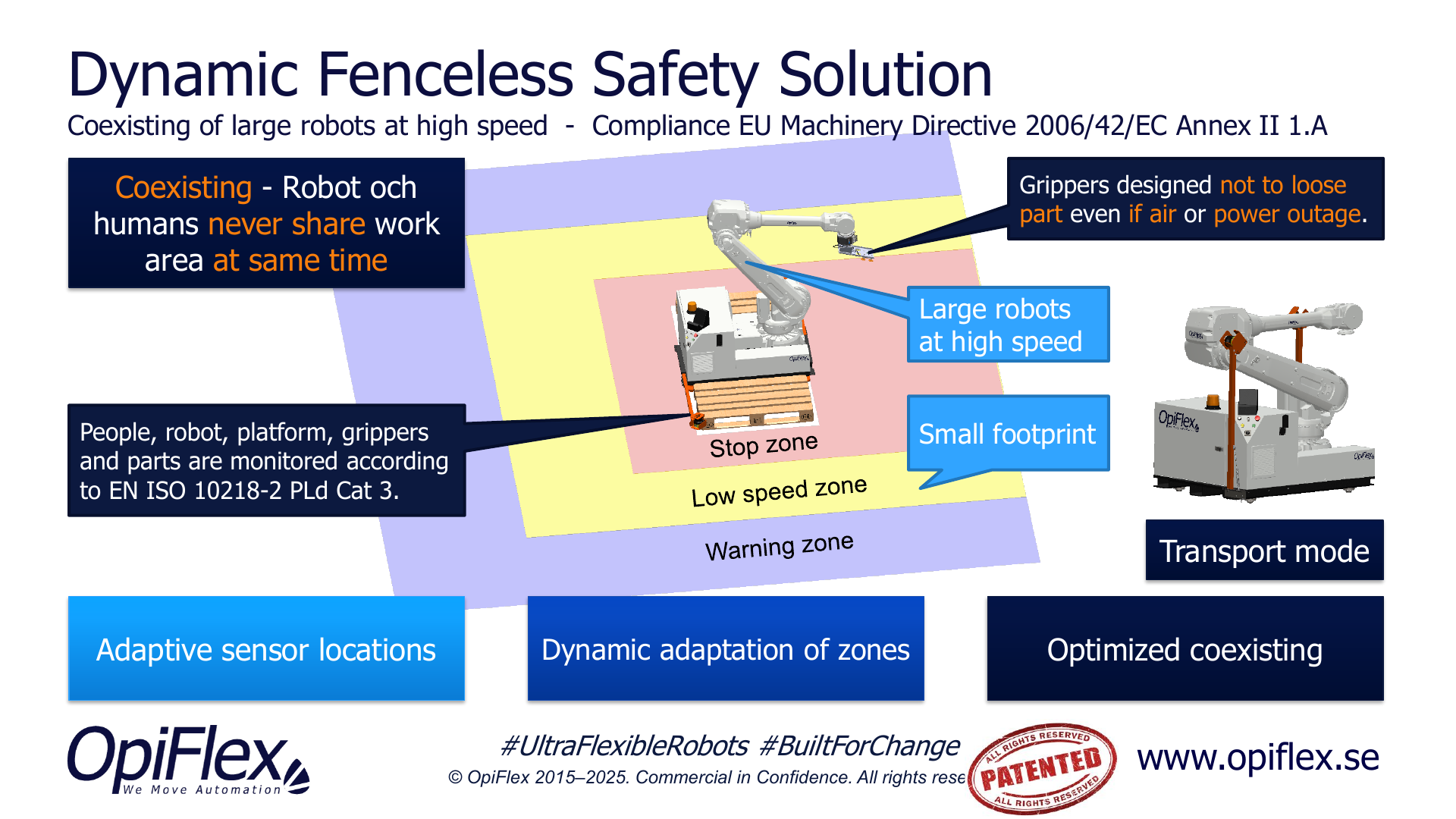
How a large industrial robot can run at full speed without a fence: the principle, the standards it meets, and what it means for floor space and manual access.
Read more -
Sustainable automation: reuse robots | OpiFlex
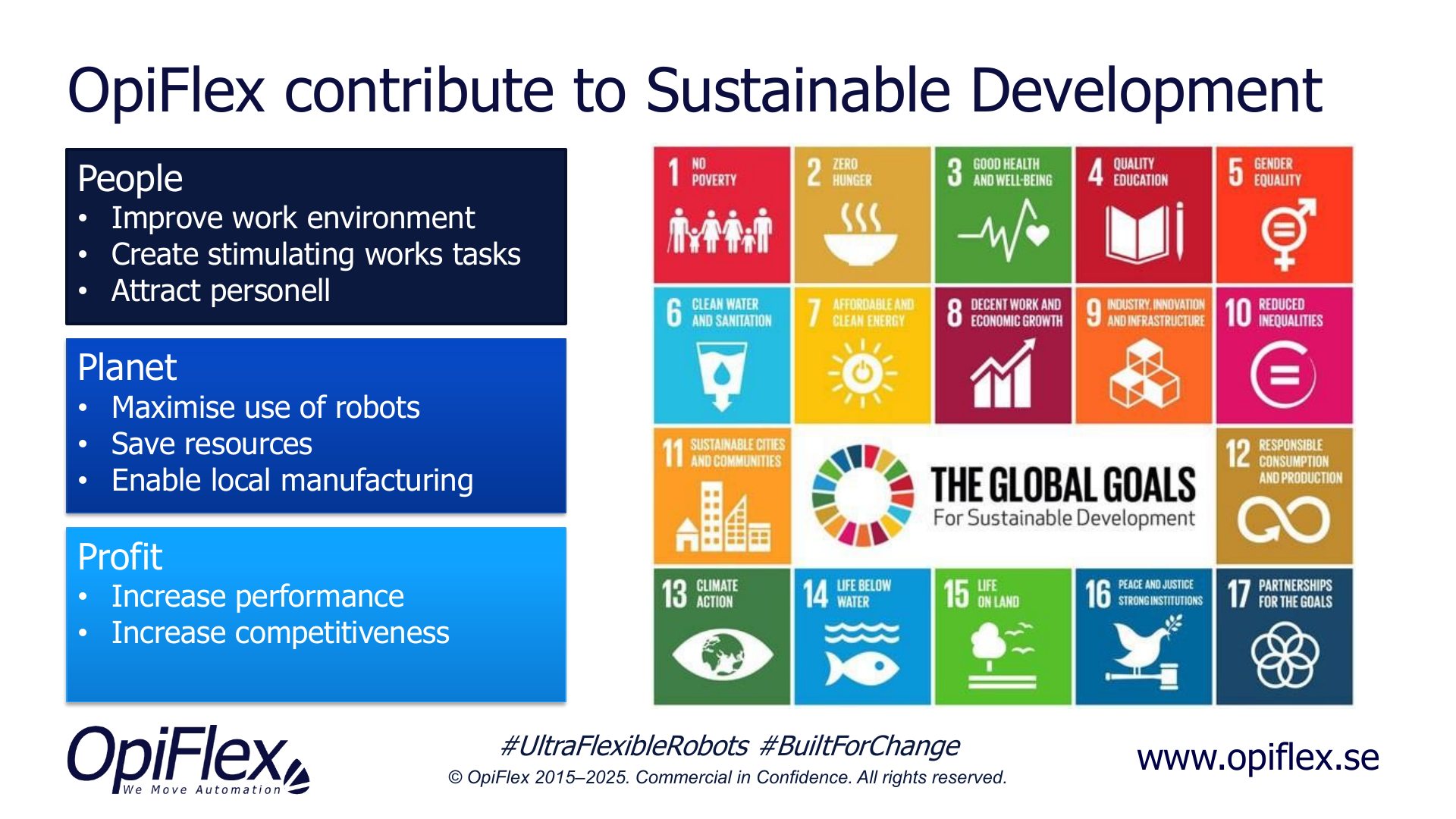
Three lines at 32, 24 and 26 % utilisation, one shared mobile robot at 82 %. An example of how standardised, mobile robots get more hours and are reused.
Read more -
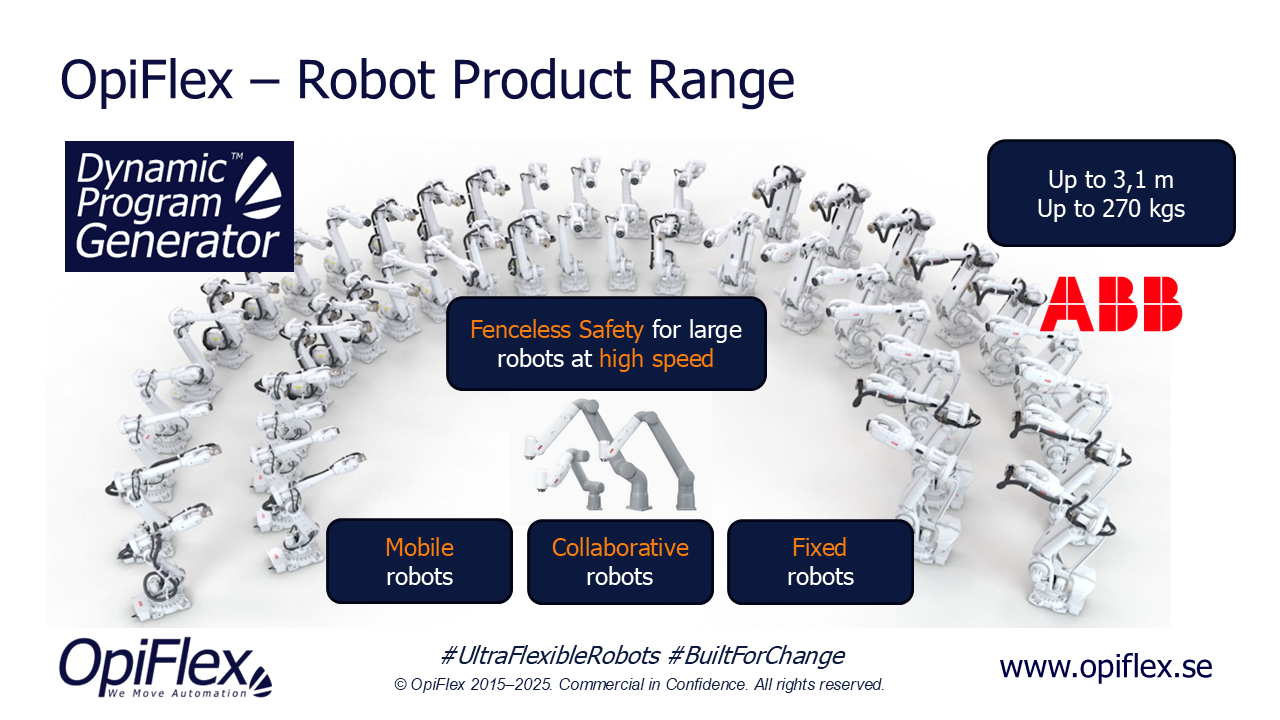
Mobile, fixed or collaborative robots, one software | OpiFlex
OpiFlex offers mobile, fixed and collaborative ABB robots with the same Dynamic Program Generator and fenceless safety. Choose the robot for your production.
Read more