
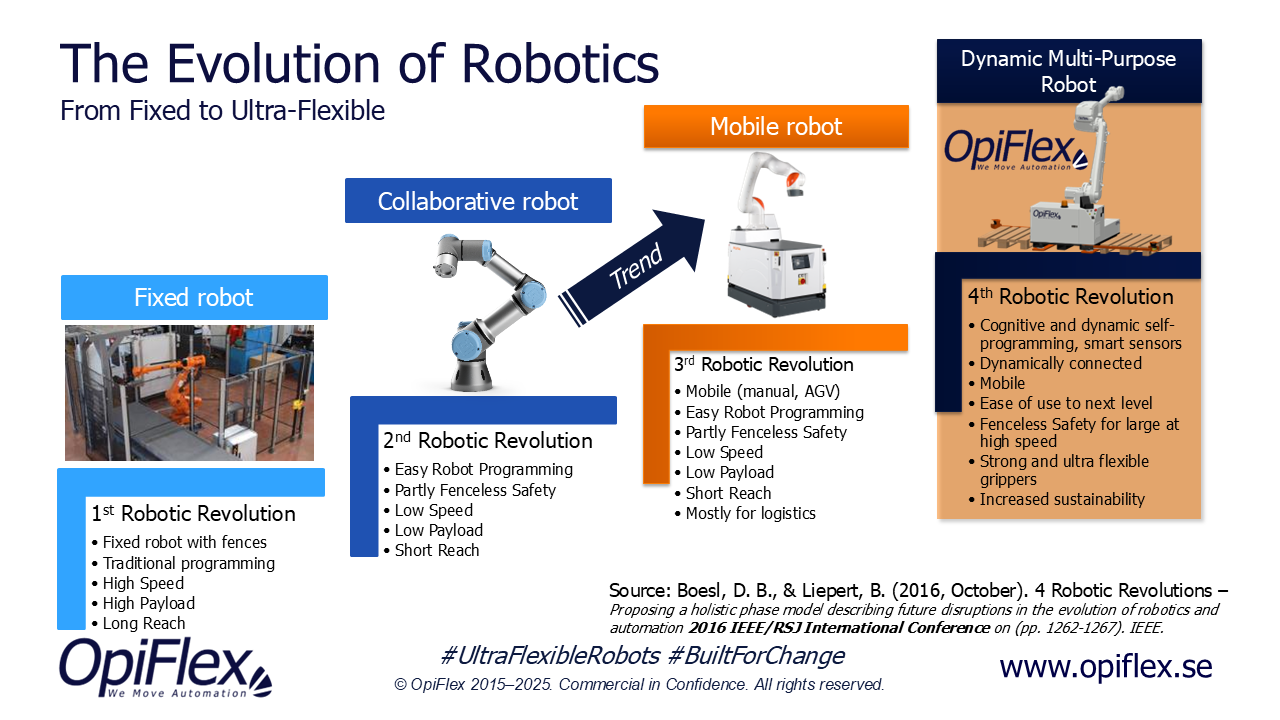
Industrial robots have changed manufacturing in waves. Each wave solved a problem the previous one left open, and each still has its place on the factory floor today. Researchers Dominik Boesl and Bernd Liepert described this as four robotic revolutions.
The common thread is flexibility: how quickly a robot can be put to work on something new.
1. The fixed robot
The first revolution brought the fixed industrial robot behind a fence. High speed, high payload and long reach, programmed by specialists. For long runs of the same product it is still a proven and very good choice.
2. The collaborative robot
The second revolution brought the collaborative robot. Easier programming and partly fenceless safety made robots accessible to many more companies. The robot works close to people, with lower speed, lower payload and shorter reach.
3. The mobile robot
The third revolution made the robot mobile, moved manually or by AGV, with easy programming and partly fenceless safety. These robots are mostly used in logistics, with lower speed, payload and reach.
4. The dynamic multi-purpose robot
The fourth revolution combines what the earlier ones brought, without giving up the strengths of the first. This is where OpiFlex works:
- Cognitive and dynamic self-programming, with smart sensors.
- Dynamically connected to ERP, MES and quality systems.
- Mobile, moved with a pallet truck or AGV.
- Ease of use at the next level: an operator adds a new part in 1–3 minutes.
- Fenceless safety for large robots at high speed.
- Strong and ultra-flexible grippers.
- Increased sustainability, since the same robot is reused as products change.
What we mean by cognitive and self-programming
We interpret cognitive and dynamic self-programming as an adaptive, self-programming solution. The operator describes the flow, and the Dynamic Program Generator creates the robot program automatically. In production, the program adapts to live input from the ERP system, quality results and sensors.
We do this in a fully deterministic way. We run large, fast robots where one error, a crash or simply a stop, can be very costly. Using AI to create the robot program itself risks making it take longer to create a new program, and it adds risk. A deterministic program does the same thing every time, and it is traceable.
That does not mean we leave AI out. We have full support for AI vision, for example, and we have developed our own vision system with AI that does not need a lot of training. AI where it helps the robot see, deterministic code where the robot moves.
Which revolution fits your production?
Few products and long series: the fixed robot is often the right answer. Light tasks close to people: the collaborative robot. Many products, short series and a layout that changes: that is where the fourth revolution makes the difference.
We are happy to look at your mix with you in a 30-minute call on Teams. Contact us.
Source: Boesl, D. B. and Liepert, B. (2016). 4 Robotic Revolutions: Proposing a holistic phase model describing future disruptions in the evolution of robotics and automation. 2016 IEEE/RSJ International Conference on Intelligent Robots and Systems, pp. 1262–1267.
Related articles
-
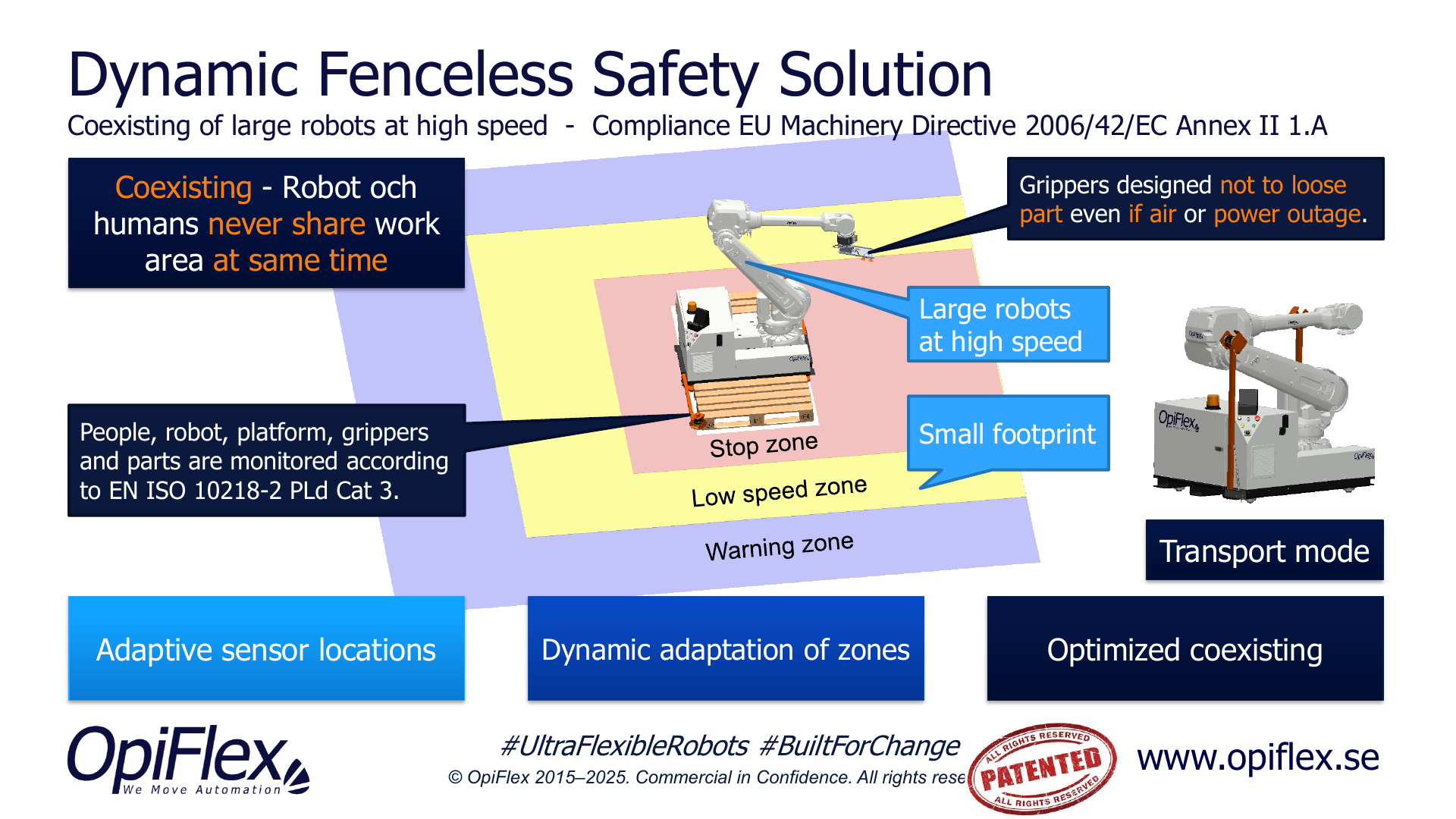
Fenceless safety for large robots at full speed | OpiFlex
How a large industrial robot can run at full speed without a fence: the principle, the zones, the standards, and when a fence is still the better choice.
Read more -
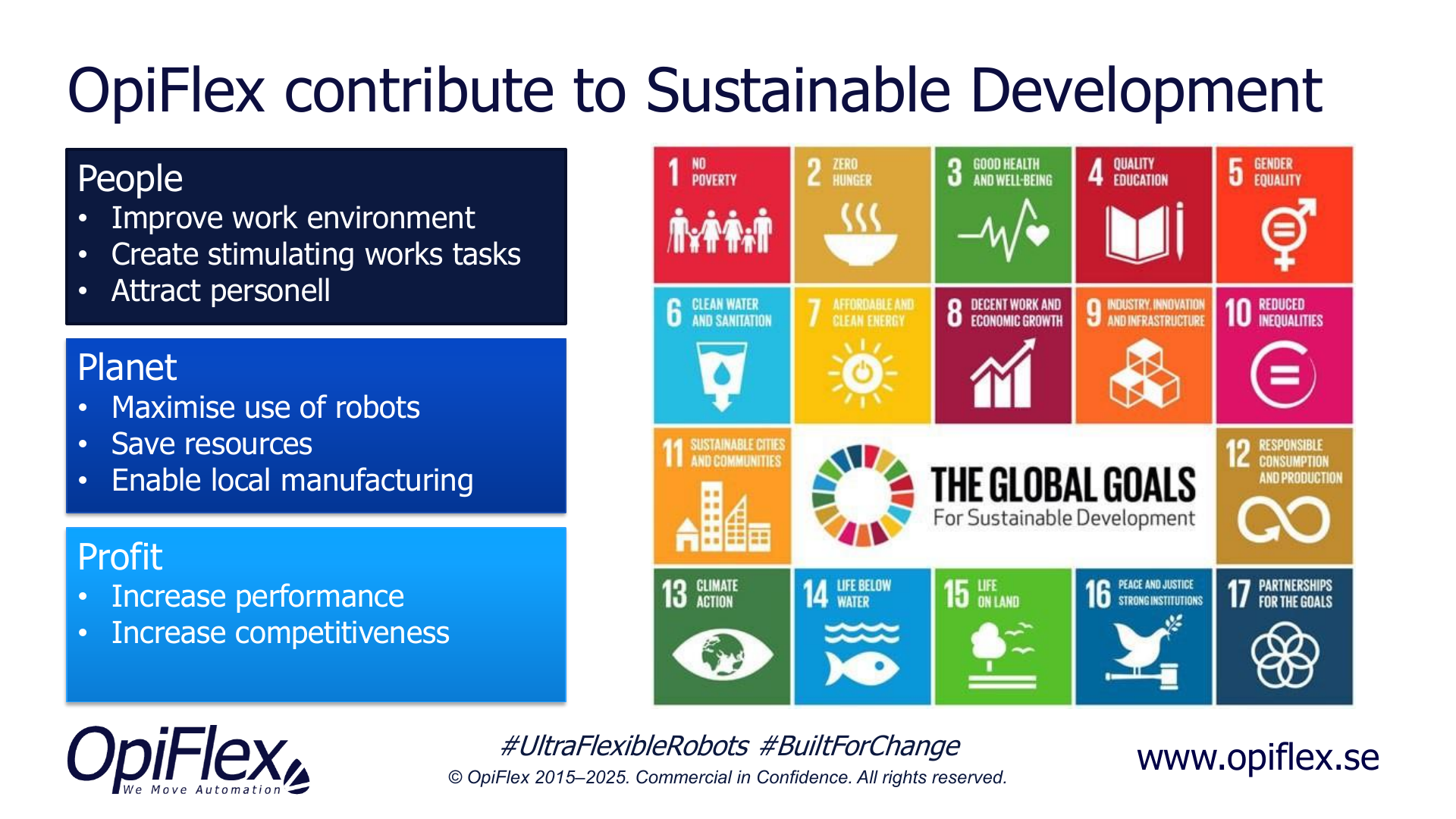
Sustainable automation: reuse robots | OpiFlex
Three lines at 32, 24 and 26 % utilisation, one shared mobile robot at 82 %. An example of how standardised, mobile robots get more hours and are reused.
Read more -
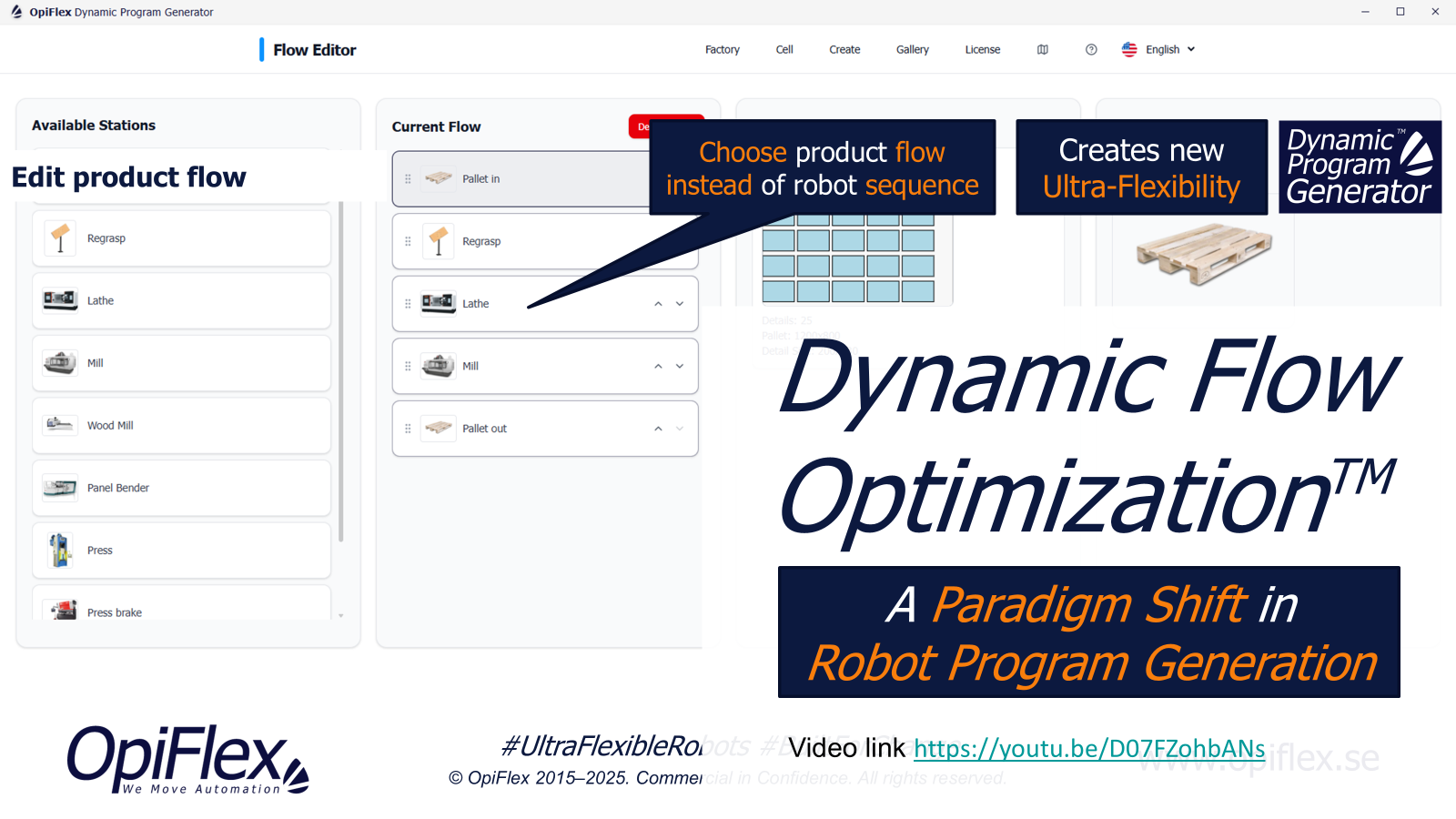
Real-time robot adjustment from ERP and quality | OpiFlex
ERP orders, quality control, sensors and vision adjust the robot's active program and flow in real time. New parts still take a 1–3 minute DPG program.
Read more