.png)
Standardised flexible robot cells for OEM, Tier 1 | OpiFlex
Large manufacturers have run robots for decades, and the fixed robot cell has served them well. What is changing is the product. More variants, shorter runs, new lines for electrification and layouts that change more often. More than 90 OEMs and Tier 1 suppliers have contacted us with the same question: how do we get flexibility without making every cell a special case?
Five needs we hear again and again
The needs match what the OECD described in its 2021 report on the future of robotics, where OpiFlex is featured on pages 25–27.
- Fast integration and installation: days instead of weeks.
- Fast ramp-up and ramp-down of production.
- Flexible configurations and fast programming.
- Layouts that can change without fences.
- Future-proof, standardised solutions that can be reused.
Standard hardware, flexible software
A custom robot cell often carries 50,000–100,000 lines of its own code and its own electrical design. Even with a good rulebook, each cell ends up a little unique, and maintenance teams in 3–5 shifts have to know them all.
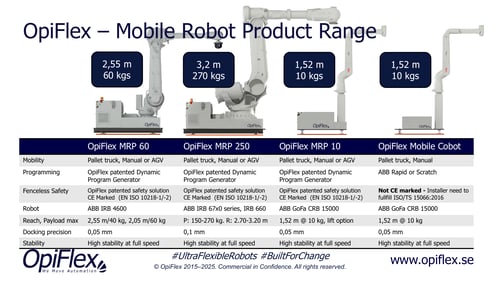
OpiFlex builds the other way round. The platform is factory-built from standard components from globally leading suppliers, with ABB robots. All flexibility sits in the software. That gives:
- Installation in 2–4 days, compared with normally 4–6 weeks.
- Quick Swap: a robot is replaced in about 15 minutes, compared with 2–3 hours, using calibrated spare robots.
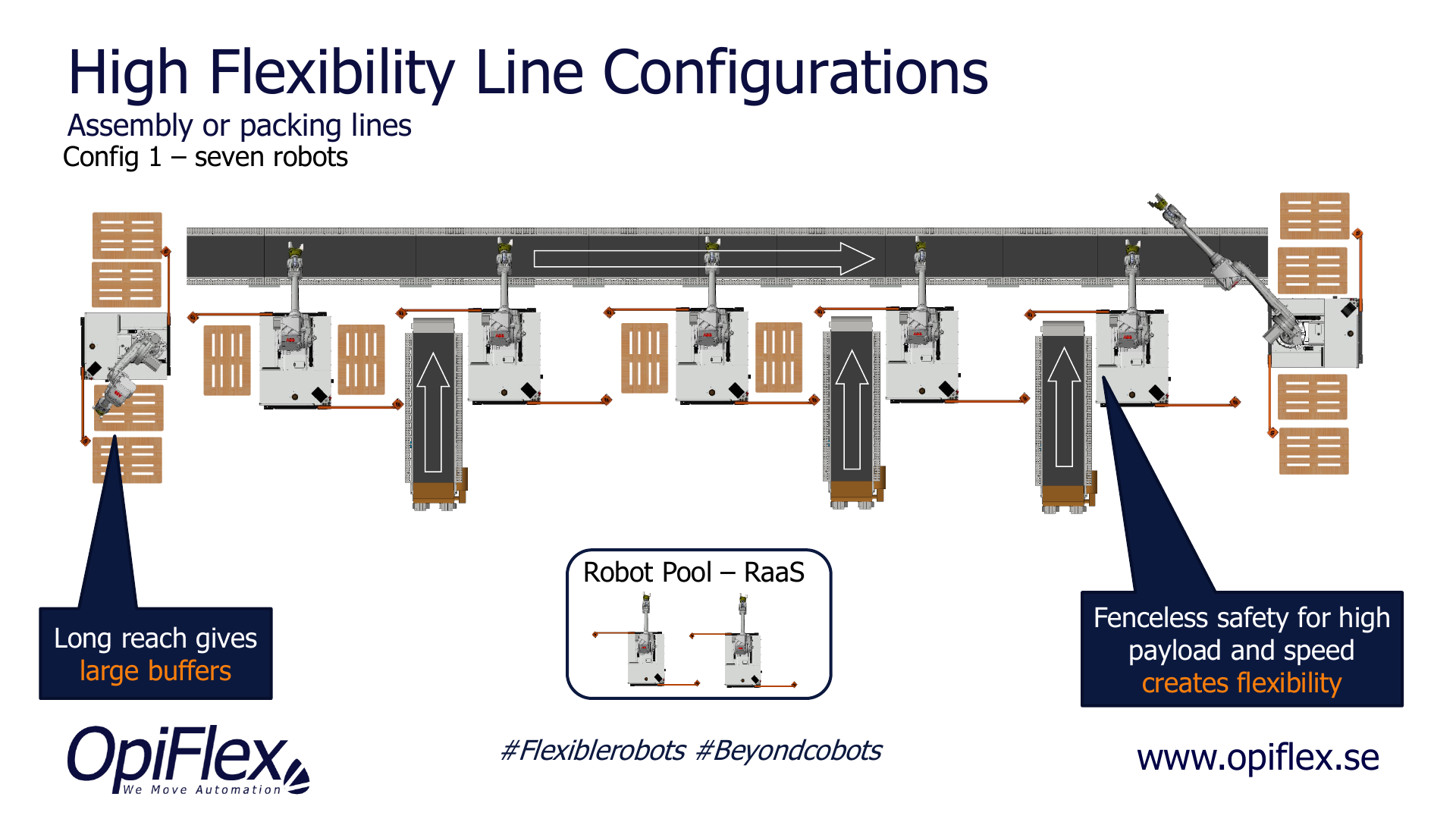
- Robot Pools: robots are shared and moved between lines, shifts and machines.
- Deterministic robot code with full traceability, and integration with ERP, MES and quality systems.
- Fenceless safety for large robots at full speed, already accepted by Scania.
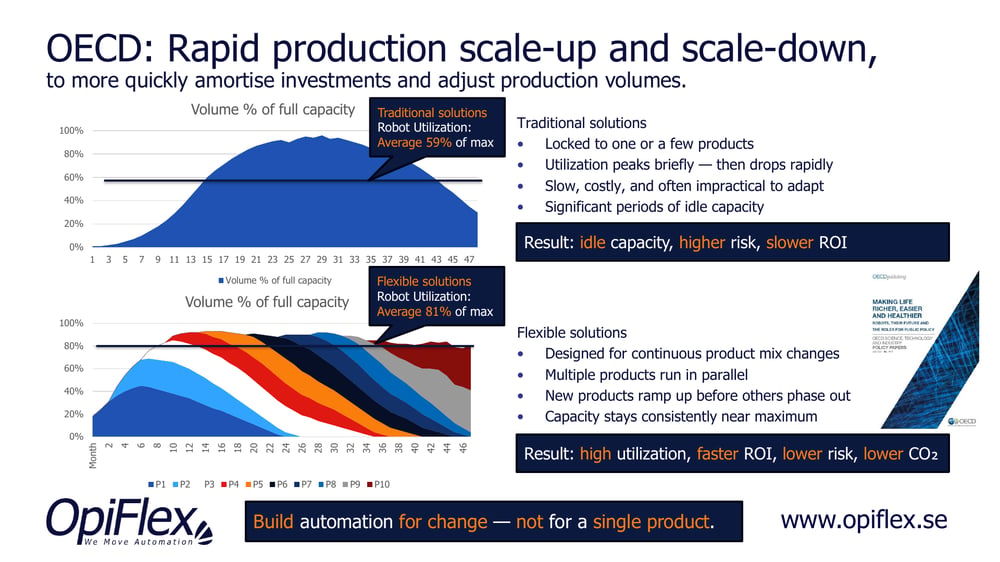
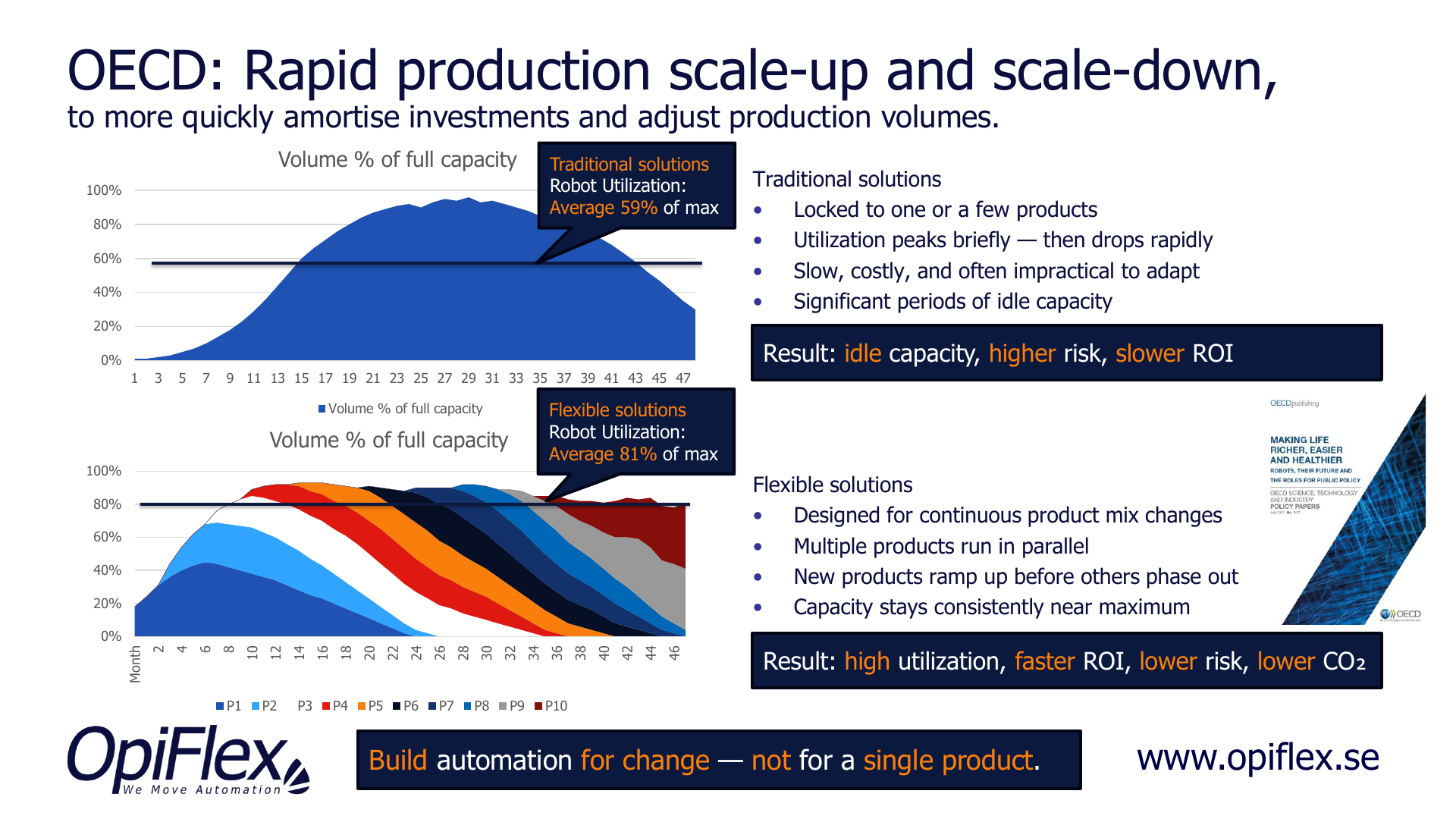
In our comparison, robot utilisation averages 81 % with this approach, against 59 % for traditional solutions.
In that comparison, ten products ramp up and down over four years. A cell built for one product peaks briefly and then has spare capacity. When the robots can move on to the next product, capacity stays close to the maximum. Order to delivery is normally 4–16 weeks.
Where it fits best
New lines that will change during ramp-up. Products with many variants. Stations that are only needed part of the time. Plants where maintenance wants fewer unique cells to look after.
Next step
We start with one application or line type and look at what can be standardised. A 30-minute call on Teams is a good first step. Contact us.
Related articles
-
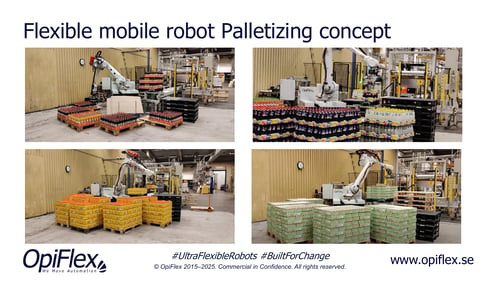
Seasonal palletising with a mobile robot cell | OpiFlex
Peak before Christmas, quiet in spring. How a mobile, fenceless palletising cell follows the season, builds mixed and display pallets, and moves between lines.
Read more -
Press brake robot without fences or a raised press | OpiFlex
A robot at the press brake, without a fence and with the press at normal working height, so operators can still run it by hand. How it works.
Read more -

Robot programming in 1–3 minutes, no robot skills | OpiFlex
An operator with no robot experience creates a new robot program in 1–3 minutes. Here is how the OpiFlex Dynamic Program Generator works, step by step.
Read more