.png)
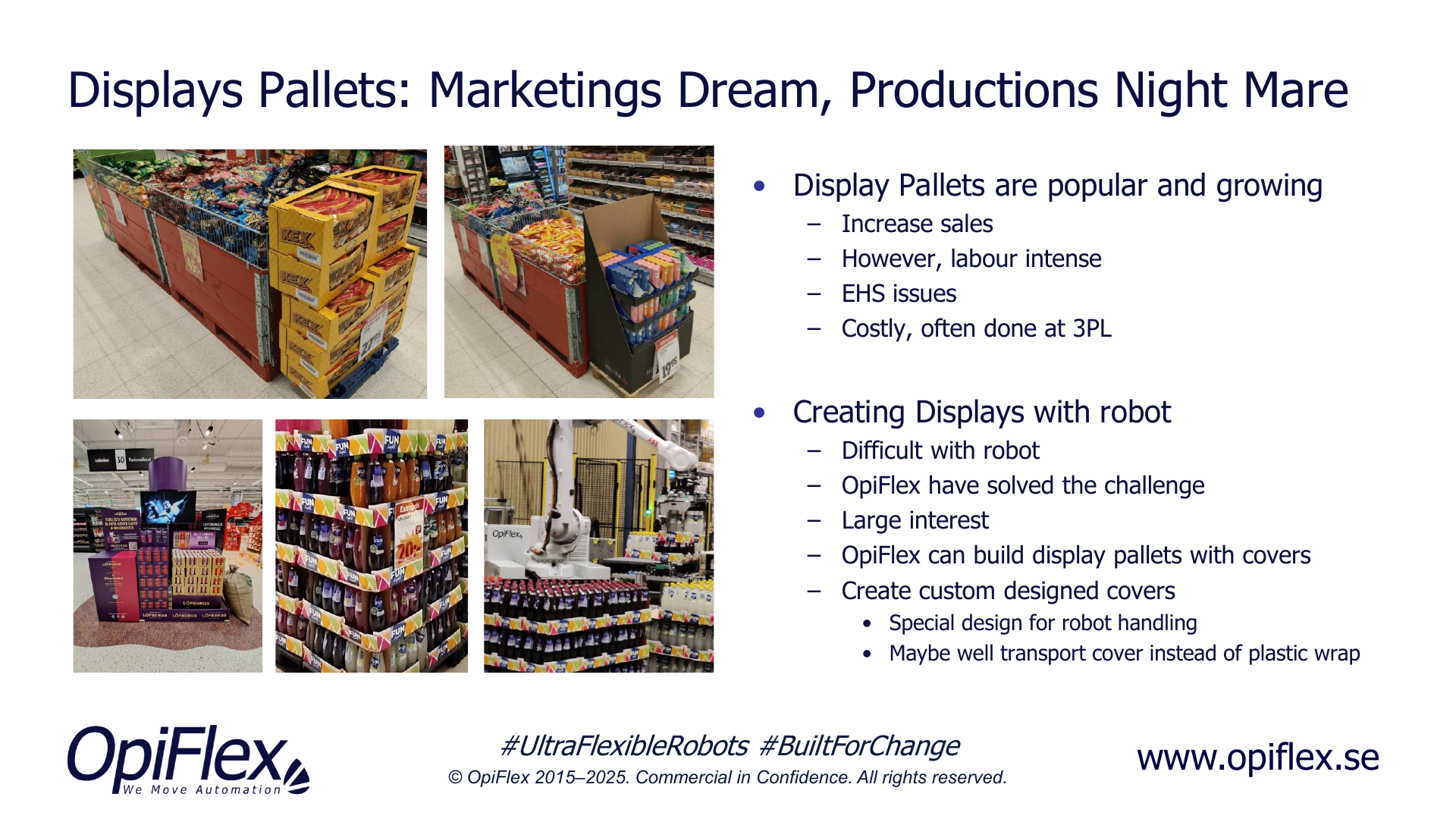
A display pallet arrives in the shop ready to sell. Several products, a cover, everything in its place. Getting it there is a different matter.
Display pallets are popular and growing. For production they mean many variants, short campaigns and a lot of manual handling, with work environment issues to match. Much of the work is done by hand, often at a third-party logistics provider.
Why display pallets are hard for a robot
A display pallet is not a standard pallet pattern. It combines several products, uses half pallets and full pallets, and needs layer sheets, covers and stabilisers in the right places. Each campaign looks different. That has made them difficult to automate.
With a cell built for change, each new campaign is a new pattern, not a new project.
The display pallet cell
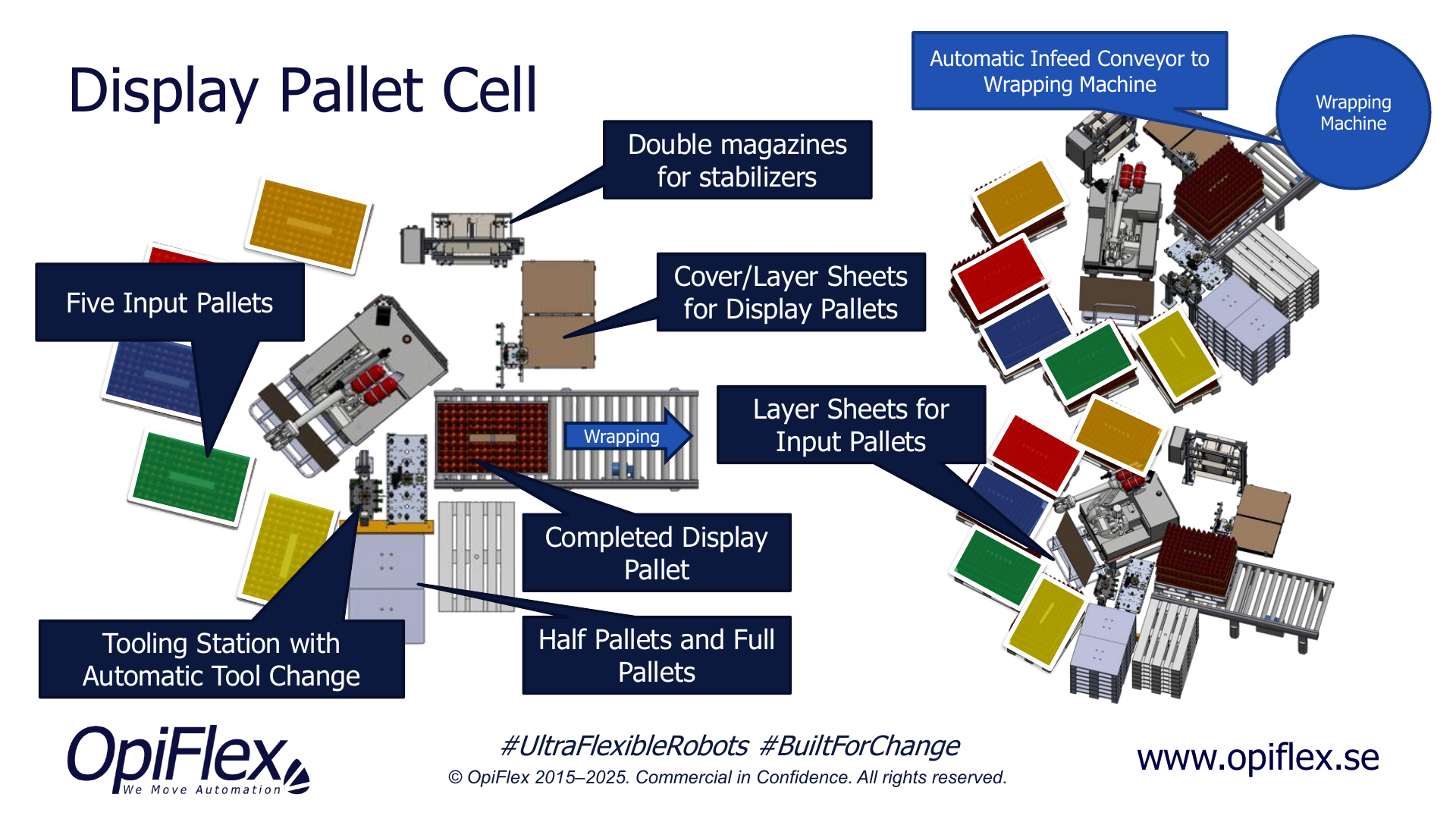
The cell has five input pallets, so several products can be combined on one display pallet. A tooling station changes tools automatically. Double magazines hold stabilisers, and there are cover and layer sheets for both the display pallets and the input pallets. It handles half and full pallets, and an automatic infeed conveyor takes the finished pallet to the wrapping machine.
A new campaign
With the Dynamic Program Generator, new trays, pallets and layers are created to change the mix, and sequences and tool changes are optimised automatically. With the OpiFlex Custom Pallet Builder, you draw the boxes and the pattern, layer by layer, and the robot code is generated automatically. The cell can also handle covers designed specifically for robot handling.
The safety is fenceless, also for large robots at high speed, which keeps the cell compact.
The Orkla case
Orkla uses flexible OpiFlex cells for display pallets. In the Orkla case, the footprint was about 80 % smaller than a traditional palletising cell, and capacity was 2.6 times higher. The robot is part of a Robot Pool, so it can be shared and moved where it is needed. Orkla has since placed a follow-up order for flexible display pallet solutions in two factories, Kumla and Örebro.
Your next campaign
Every display pallet operation looks a little different. If you send us a picture of a typical display pallet and a rough idea of your campaign volumes, we can see together whether it fits in a cell like this. Contact us.
Related articles
-
Mixed palletising and parcels, fully traced | OpiFlex
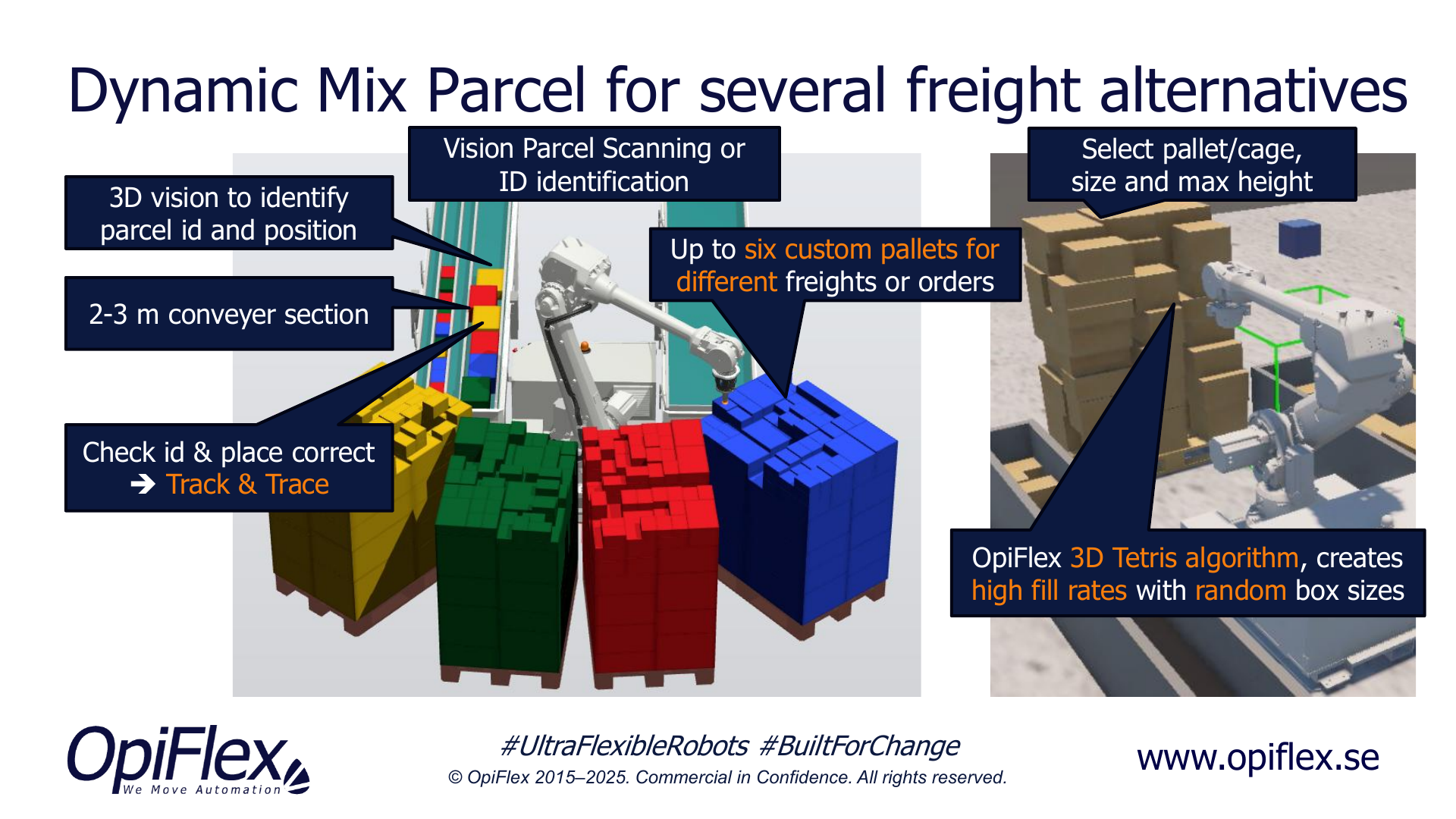
Up to six mixed pallets or parcel cages at once, deterministic 3D Tetris with fill rates up to the high 90s %, and every item traced until the pallet is sealed.
Read more -
One robot, several CNC machines: machine tending | OpiFlex
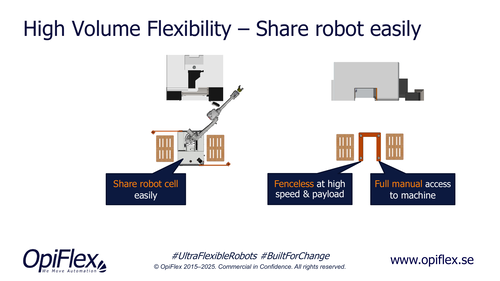
When one robot moves between several CNC machines, small batches and night shifts start to pay. How machine shops use a mobile robot cell, with a real case.
Read more -
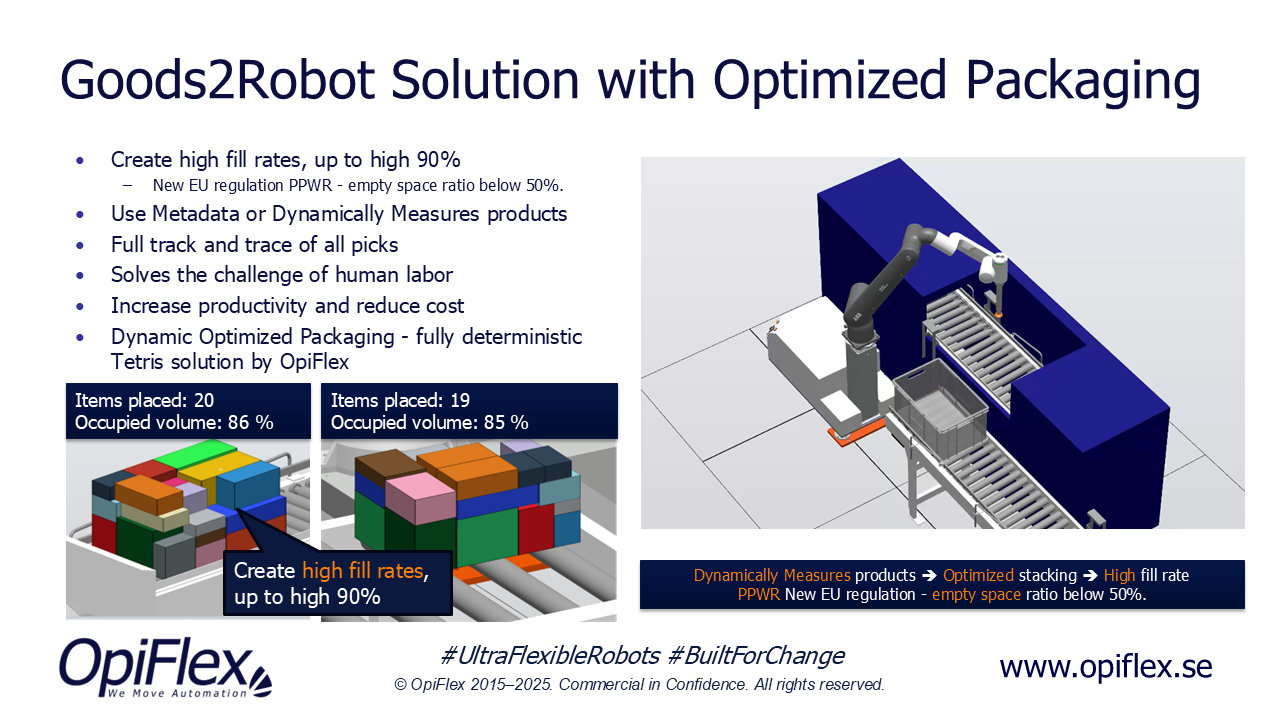
Goods2Robot: optimised packing with a cobot | OpiFlex
Goods2Robot packs mixed orders with an ABB GoFa cobot. AI vision helps the robot see, deterministic 3D Tetris plans the box, with full track and trace.
Read more